Table of Contents
ToggleThe tiny house movement has transformed how New Jersey residents think about homeownership. With skyrocketing property prices across the state, tiny houses for sale in New Jersey offer a practical alternative, combining affordability, sustainability, and simplified living in a compact footprint. Whether you’re a first-time buyer priced out of traditional markets, downsizing after retirement, or seeking a sustainable lifestyle, understanding the tiny house landscape in New Jersey is essential. This guide walks you through everything you need to know about buying a tiny house in the Garden State, from zoning regulations to financing options and the best communities to settle in.
Key Takeaways
- Tiny houses for sale in New Jersey offer 30–50% cost savings compared to traditional homes, making homeownership accessible for middle-income buyers in a state with median prices exceeding $500,000.
- Zoning regulations are the biggest hurdle when buying a tiny house in New Jersey—verify local classifications directly with municipal planning offices since many towns technically exclude tiny homes or classify them as ADUs or non-conforming properties.
- Financing options for tiny houses include conventional mortgages for permanent-foundation properties, specialty lenders offering higher rates, personal loans, or cash purchases, though lender options are more limited than traditional home loans.
- North and Central Jersey municipalities like Hackettstown, Princeton, and New Brunswick offer more progressive zoning policies for tiny homes, while rural South Jersey pockets provide lower prices ($80,000–$120,000) but fewer amenities.
- Prioritize ceiling height (8.5+ feet), quality insulation (R-21 walls, R-49 ceiling), code-compliant electrical and plumbing, and permanent foundations over trailer-based systems in New Jersey’s humid climate to avoid costly repairs.
- Calculate total costs including purchase price, financing, insurance, taxes, and utilities—tiny house living is most successful for individuals or couples without children, professionals seeking simplicity, or retirees downsizing.
Why Tiny Houses Are Trending In New Jersey
New Jersey’s housing crisis has created fertile ground for tiny house adoption. The state’s median home price exceeds $500,000 in many areas, pushing buyers toward creative solutions. Tiny houses, typically 400 square feet or fewer, cut construction costs by 30 to 50 percent compared to traditional homes, making homeownership accessible to middle-income families.
Beyond affordability, environmental consciousness drives demand. A smaller home requires less energy to heat and cool, reducing utility bills by 40 percent annually in many cases. Younger buyers especially value this sustainability angle, aligning with broader climate awareness. Also, fewer belongings and lower maintenance burden appeal to retirees and busy professionals who want freedom from endless home upkeep.
The cultural shift matters too. Tiny living isn’t fringe anymore, it’s mainstream. New Jersey municipalities are slowly catching up, recognizing that tiny houses can address housing shortages and tax revenue challenges simultaneously.
What To Expect When Buying A Tiny House In NJ
Buying a tiny house in New Jersey differs significantly from purchasing a traditional home. You’ll navigate unfamiliar zoning rules, unconventional financing, and a limited inventory. Understanding these differences upfront prevents costly surprises.
Zoning Laws And Regulations
Zoning is the biggest hurdle. Most New Jersey municipalities define “single-family homes” by minimum square footage (often 1,200+ square feet), which technically excludes tiny houses. Some towns classify them as accessory dwelling units (ADUs), mobile homes, or don’t address them at all. This legal gray area creates complications, your tiny house may be non-conforming, affecting resale value and financing.
Before purchasing, verify the property’s zoning classification with the local municipality. Contact the planning or zoning office directly: don’t rely on listing descriptions. Some progressive towns like Lambertville and Princeton have begun updating ordinances to permit tiny homes, but most haven’t. A few jurisdictions require special permits or variance applications, adding time and legal costs ($2,000 to $5,000 typically).
Foundation type matters too. If your tiny house sits on a permanent foundation, it’s treated as real property. Trailer-based tiny homes on wheels face stricter regulations and may be classified as RVs, limiting where you can legally park. Building codes still apply regardless of size, electrical, plumbing, and structural standards don’t shrink with the building.
Pricing And Market Trends
Tiny house prices in New Jersey range from $80,000 to $250,000, depending on location, finishes, and whether it’s custom-built or pre-owned. The cheapest options are basic models on leased land in rural areas. Mid-range units ($120,000–$180,000) offer livable finishes and are often located closer to job centers. Premium custom builds exceed $200,000 but include high-end materials and smart home integration.
Market trends show that tiny houses appreciate slower than traditional homes because zoning uncertainty limits buyer pools. A tiny house may sit on the market 2 to 4 months longer than a conventional home. Lenders view them as riskier investments, so financing rates are typically 0.5 to 1.5 percent higher than standard mortgages.
Negotiating power belongs to buyers. Sellers often price aggressively to move inventory, so don’t accept the first asking price. Comparable sales in your area give leverage, use them.
Best Regions And Communities For Tiny House Living
Not all New Jersey regions are equally tiny-house friendly. The northern and central parts of the state offer more progressive zoning, while South Jersey remains restrictive in many areas.
North Jersey municipalities like Hackettstown and Blairstown have updated zoning to permit ADUs and smaller homes. These towns attract commuters to New York City and offer rural charm. Prices range from $100,000 to $150,000 for a modest tiny house.
Central Jersey, particularly around Princeton and New Brunswick, embraces tiny living near academic and urban centers. These communities are expensive ($150,000–$250,000) but offer walkability and job proximity. The transit access makes car-free or car-light living feasible.
South Jersey, including areas near Atlantic City and Cape May, is slower to adapt. But, rural pockets around Vineland and Bridgeton have fewer zoning restrictions. Prices are lower ($80,000–$120,000), but amenities and employment opportunities are limited.
When evaluating regions, consider commute time, utility costs (North Jersey sees higher heating bills), school quality if relevant, and proximity to services. Rural areas offer land and zoning flexibility but may require longer drives. Walkable communities reduce transportation costs but command premium prices.
Key Features To Look For In A New Jersey Tiny Home
Smart layouts and quality construction separate exceptional tiny homes from cramped disappointments. When touring tiny houses, prioritize function over square footage.
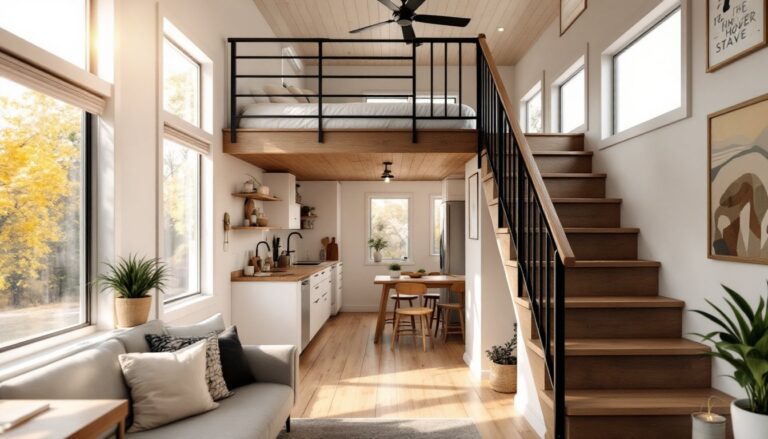
Ceiling height matters, 8.5 feet minimum prevents claustrophobia: 9 feet is ideal. Lofted bedrooms are space-savers but aren’t for everyone: if you’re tall or claustrophobic, ground-floor sleeping areas are non-negotiable. Open floor plans maximize perceived space, but you’ll lose privacy and sound isolation.
Insulation and HVAC systems are critical in New Jersey’s variable climate. Quality insulation (R-21 walls, R-49 ceiling) keeps winter heating and summer cooling costs reasonable. A dedicated mini-split heat pump system or efficient furnace/AC combo beats window units. Poor insulation drives utility bills up 50 percent or more.
Plumbing and electrical should meet current NEC (National Electrical Code) and IRC (International Residential Code) standards. Outdated wiring or undersized water heaters cause problems immediately. Request inspection reports and code compliance documentation.
Storage solutions are what separate living space from cluttered boxes. Built-in shelving, under-bed drawers, and wall-mounted systems reclaim precious space. Don’t overlook exterior storage sheds if the property permits them.
Foundation condition requires professional inspection. Wood rot, foundation settling, or moisture intrusion spell expensive repairs. Permanent foundations (concrete, pilings) are preferable to trailer-based systems in New Jersey’s humid climate. References from platforms like Dwell showcase modern tiny home designs that solve these challenges elegantly.
Outdoor space amplifies living area functionally. A small deck, patio, or garden extends your usable square footage and improves resale appeal.
Financing And Legal Considerations
Financing a tiny house is trickier than a traditional home. Most conventional lenders avoid loans below $50,000 and view tiny homes as non-standard collateral. Your options are limited but growing.
Conventional mortgages work if your tiny house qualifies as real property on a permanent foundation. You’ll need a 10 to 20 percent down payment, and expect higher interest rates. Appraisals often come in low because comps are scarce, this hurts your loan-to-value ratio.
Specialty lenders like Tiny Home Lenders and some credit unions offer dedicated tiny house financing. Rates are higher (5 to 7 percent) than traditional mortgages, but approval is faster. These lenders understand zoning complexities and accept properties others won’t touch.
Personal loans or RV loans cover cheaper models, especially trailer-based ones. Interest rates are steeper (6 to 12 percent), and terms are shorter (5 to 10 years). You won’t build equity as efficiently, but approval is easier for first-time buyers with decent credit.
Cash purchases bypass lending entirely. If you can afford it outright, you eliminate appraisal and financing contingencies, making your offer more competitive.
Legally, hire a real estate attorney familiar with tiny houses and zoning. Generic attorneys miss nuances costing you thousands down the line. Your attorney should review: zoning compliance, title clarity, HOA restrictions if applicable, and any deed restrictions limiting property use.
Insurance is another consideration. Standard homeowners policies may not cover trailer-based tiny homes. Specialists like Tiny Home Insurance fill this gap, though premiums are higher. Get quotes before purchasing, insurance costs factor into affordability calculations.
Resale value depends heavily on zoning legitimacy. A tiny house in a municipality that explicitly permits them holds value better than one in a gray zone. If you ever need to sell, you want multiple potential buyers. Articles on real estate trends from Curbed track how municipalities are adapting zoning codes, helping buyers understand long-term market positioning.
Tax implications also matter. Some municipalities assess tiny houses lower property taxes (a perk), while others apply standard rates. Ask your accountant about depreciation, if applicable, and whether tiny home ownership affects your tax bracket.
Making Your Tiny House Decision
Tiny houses in New Jersey offer genuine value for the right buyer. They’re most successful for individuals or couples without children, professionals seeking simplicity, or retirees downsizing. If you need multiple bedrooms, frequent guests, or abundant storage, a tiny house may frustrate rather than liberate.
Start by researching zoning in your target area, this determines feasibility more than price or availability. Connect with local tiny house communities, attend open houses, and inspect multiple properties. Use platforms like Houzz to visualize design possibilities and find contractors experienced with tiny home construction.
Finally, calculate total costs: purchase price, financing, insurance, taxes, utilities, and maintenance. A $120,000 tiny house with $200/month utilities and $300/month mortgage beats a $300,000 traditional home in raw economics. That clarity drives the decision. The tiny house movement in New Jersey is real, growing, and increasingly accessible, if you approach it with eyes open.