Table of Contents
ToggleFinding tiny black mosquitoes buzzing around your home can feel unsettling, especially when they seem to multiply overnight. Unlike the larger mosquitoes you might encounter outdoors, these smaller varieties often breed indoors near damp areas and are surprisingly common in homes year-round. Whether they’re fungus gnats, drain flies, or actual midges, the problem is real and frustrating. The good news? You don’t need professional help to tackle the issue if you act fast and follow the right approach. This guide walks you through identifying what you’re dealing with, eliminating the current infestation, and preventing future invasions without turning your home into a chemical hazard.
Key Takeaways
- Tiny black mosquitoes in your home are typically fungus gnats, drain flies, or biting midges that breed in damp areas like houseplant soil, drains, and standing water sources.
- Eliminate breeding sources by reducing moisture, pouring boiling water down drains, letting houseplant soil dry between waterings, and cleaning all standing water areas to stop infestations at the root.
- Combine yellow sticky traps and low-toxicity treatments like pyrethrin insecticides or neem oil for immediate relief while you address moisture problems.
- Prevent future infestations by maintaining indoor humidity below 50%, watering plants only when soil is dry, cleaning drains weekly, and fixing any water leaks promptly.
- Call a professional pest control service if the infestation spreads across multiple rooms, DIY methods fail after two weeks, or you suspect hidden moisture problems in walls or crawl spaces.
What Are Tiny Black Mosquitoes and Why They Invade Homes
Tiny black mosquitoes in your home are usually one of three culprits: fungus gnats, drain flies, or biting midges. Fungus gnats are the most common indoor pest, they’re small (roughly 1/8 inch), dark gray or black, and attracted to moist soil and decomposing organic matter. Drain flies thrive in slow-moving or clogged drains where they feed on buildup and lay eggs. Biting midges are less common indoors but do appear in homes near standing water.
The reason these pests invade is simple: your home provides food, water, and shelter. Unlike outdoor mosquitoes that need large bodies of water to breed, these tiny varieties breed in houseplant soil, sink drains, garbage disposals, pet water bowls, or any damp corner left undisturbed. They’re attracted to decaying plant matter, organic slime in pipes, and excess moisture. Once they establish a population, they reproduce quickly, a single drain fly can lay eggs that hatch in 48 hours, creating an exponential problem if left unchecked.
Signs of a Tiny Black Mosquito Infestation
Spotting an infestation early makes elimination much easier. The most obvious sign is seeing small black or grayish insects flying near windows, kitchen counters, or bathrooms. They move slowly and erratically compared to regular flies, and you’ll often notice them congregating around houseplants, sinks, or standing water.
Another telltale sign is finding them in clusters, if you see one, there are likely dozens or hundreds breeding nearby. Check dark, damp areas: under the sink, around toilet bases, in refrigerator drain pans, and in soil of indoor plants. If you’re seeing them consistently over several days, especially near kitchen or bathroom areas, you have an active breeding source that needs attention. The longer you wait, the larger the population becomes, making the problem exponentially harder to solve.
Quick DIY Methods To Get Rid of Them Fast
The fastest way to tackle an infestation is a two-pronged approach: eliminate the breeding source and trap the adults already flying around your home.
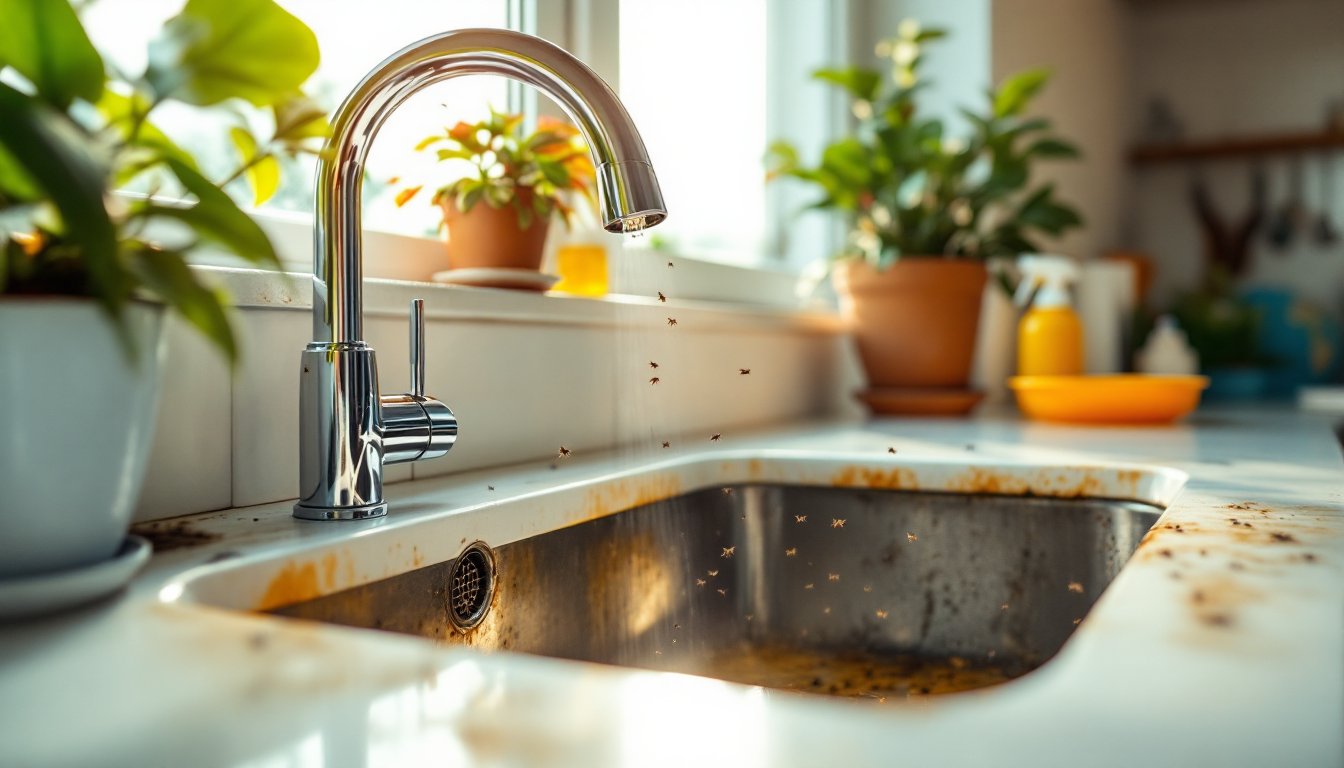
Start by identifying and eliminating moisture. Check all drains, kitchen, bathroom, and laundry room. If drain flies are present, you’ll see them flying out when you turn on the tap. Pour boiling water down drains to kill eggs and larvae, then follow with a commercial drain cleaner or a mixture of baking soda and white vinegar (1 cup baking soda followed by 1 cup vinegar, covered for 30 minutes). For fungus gnats in houseplant soil, let the top 2 inches dry out completely between waterings, gnats breed in consistently wet soil. You can also replace the top layer of soil or repot plants in fresh, sterile potting mix.
Next, inspect and clean all standing water sources: pet bowls, plant saucers, humidifier trays, and refrigerator drain pans. Empty and refill pet water daily.
For immediate relief while you’re addressing sources, use yellow sticky traps placed near infested areas. These trap flying insects and give you a visual indicator of how many are still active. They’re non-toxic and cost just a few dollars for a pack of multiple traps.
If you want a chemical approach, insecticides like Gnat-killing spray or drain-specific treatments work, but only after you’ve eliminated the breeding source. Otherwise, you’ll keep killing adults while new ones hatch.
Using Insecticides and Traps Effectively
Yellow sticky traps are your first line of offense because they’re safe and effective for monitoring. Place them directly above the soil of infested plants and on windowsills where you see activity. Replace them every 3-5 days as they fill up. You’re not just killing pests, you’re getting real data on whether your efforts are working.
For chemical treatments, spray-based pyrethrin insecticides or neem oil work well and break down quickly without lingering in your home. Both are low-toxicity and safe for interior use when applied according to label instructions. Spray in areas where you see the most activity, especially near windows and around moisture sources. Always wear nitrile gloves and a dust mask when applying any insecticide, and ensure good ventilation by opening windows. These products kill flying adults but won’t address the breeding source, they’re part of the solution, not the whole solution.
For drain-specific problems, enzymatic drain treatments designed to break down organic buildup work better than bleach, which only kills surface larvae. Products containing beneficial bacteria and enzymes consume the slime layer where flies breed, eliminating their food source over several applications.
Prevention Strategies To Keep Them Out Long-Term
Once you’ve cleared the infestation, prevention is about maintaining conditions that don’t support breeding. Keep indoor humidity below 50% by using a dehumidifier if needed, fungus gnats thrive in damp environments. Run exhaust fans in bathrooms and kitchens during and for 20 minutes after showers or cooking.
Water houseplants only when the top inch of soil is dry. Overwatering is the number-one reason indoor plant owners end up with gnat problems. Let soil dry between waterings, and always use saucers or trays under pots to catch excess water, but empty the saucers daily so water doesn’t sit.
Clean sink drains weekly. Pour boiling water down each drain once a week as preventive maintenance. This keeps organic buildup from accumulating and offering a breeding ground. For garbage disposals, run them regularly with water and occasionally grind ice cubes to keep blades and pipes clear.
Store garbage in sealed containers and take it out regularly. Don’t leave fruit, vegetable scraps, or damp food debris sitting on counters. Keep drains covered with fine-mesh screens or drain stoppers, most insects enter homes through pipes.
Check for leaks under sinks, around toilets, and in basements or crawl spaces. Standing water from slow leaks provides ideal breeding sites. If you find moisture issues, repair them promptly. Even small leaks create perfect conditions for pest populations to explode over time. Addressing root causes, moisture, organic matter, standing water, is far easier than dealing with established infestations.
When To Call a Professional Pest Control Service
For most homeowners, DIY methods work well if applied consistently. But, call a professional if the infestation is widespread across multiple rooms, if you’ve tried the above steps for two weeks with no improvement, or if you can’t identify the breeding source even though thorough inspection.
Professionals have access to stronger treatments, better equipment for locating hidden breeding sites, and expertise in identifying the exact pest species. They can also assess structural issues, like hidden moisture problems in walls or crawl spaces, that DIY approaches can’t address. This is especially important if the infestation coincides with water damage or if you suspect a plumbing issue you can’t locate yourself.
Expect to pay between $150–$400 for an initial professional treatment, depending on your region and the severity. Many pest control companies offer follow-up visits and guarantees, which add value if the problem recurs. Get quotes from at least two local providers before committing. Some issues, like standing water from damaged gutters or roof leaks, might require a handyman or contractor, not just pest control. Be honest about what you’ve already tried so the professional can build a targeted treatment plan rather than repeating your efforts.
Conclusion
Tiny black mosquitoes are annoying but entirely manageable with the right combination of moisture control, source elimination, and targeted traps or treatments. The key is acting quickly and staying consistent, addressing the breeding source matters more than any spray. Using methods covered in guides on removing similar pests like gnats helps reinforce proven strategies that work across multiple tiny flying insects. Most infestations clear up within 1-2 weeks once breeding sites are eliminated and prevention routines are in place. Your home will be pest-free and, more importantly, set up to stay that way.