Table of Contents
ToggleChoosing the right exterior house paint color is one of the most impactful decisions a homeowner makes, it’s the first thing visitors see, and it sets the mood for your entire property. The challenge? There are thousands of options, trends shift annually, and what looks stunning in a showroom can look wrong on your actual house under different lighting and weather conditions. This guide walks you through the best exterior house paint colors for 2026, from timeless neutrals to bold modern combinations, plus the practical framework to pick the right one for your home and climate.
Key Takeaways
- Neutral exterior house paint colors like warm whites, soft grays, and earth tones remain the safest choice for long-term satisfaction, resale value, and timeless appeal.
- Bold colors such as deep navy, forest green, and charcoal are trending in 2026 and can add sophistication to your home when paired thoughtfully with complementary trim and accent colors.
- Always test exterior paint colors with 2-foot-by-2-foot patches on your actual home at different times of day before committing, as store chips don’t account for your specific lighting conditions and weather exposure.
- Climate and regional architectural traditions directly impact color performance and aesthetics—coastal regions need mildew-resistant paints and lighter shades, while desert climates benefit from warm earth tones that resist UV fading.
- Your home’s roof color, siding material, and existing trim should guide your paint selection to ensure the new color complements rather than clashes with these non-negotiable features.
Classic Neutral Palettes for Timeless Appeal
Neutral colors remain the safest bet for long-term satisfaction and resale appeal. They’re not boring, they’re strategic. Soft whites, warm grays, and muted earth tones provide a clean canvas that lets landscaping, shutters, and architectural details shine.
Warm whites (with undertones of cream or ivory) work especially well on colonial, farmhouse, and cottage-style homes. They avoid the sterile, clinical look that pure white sometimes carries. Look for paints labeled “off-white,” “cream,” or “ivory”, these typically sit around 90–95% light reflectance value (LRV), meaning they bounce heat while still reading as crisp and clean.
Soft grays have become a go-to for modern farmhouse and contemporary homes. The key is selecting a gray with warm undertones (sometimes called greige, gray plus beige) rather than cool blue-grays, which can feel institutional. Greige pairs well with black accents like doors, trim, or metal railings.
Warm earth tones, think warm taupes, soft terracotta, and muted tan, work beautifully in regions with desert or Mediterranean climates. These colors age gracefully and hide dirt and weathering better than lighter shades. They also complement natural stone, wood siding, and warm-toned landscaping.
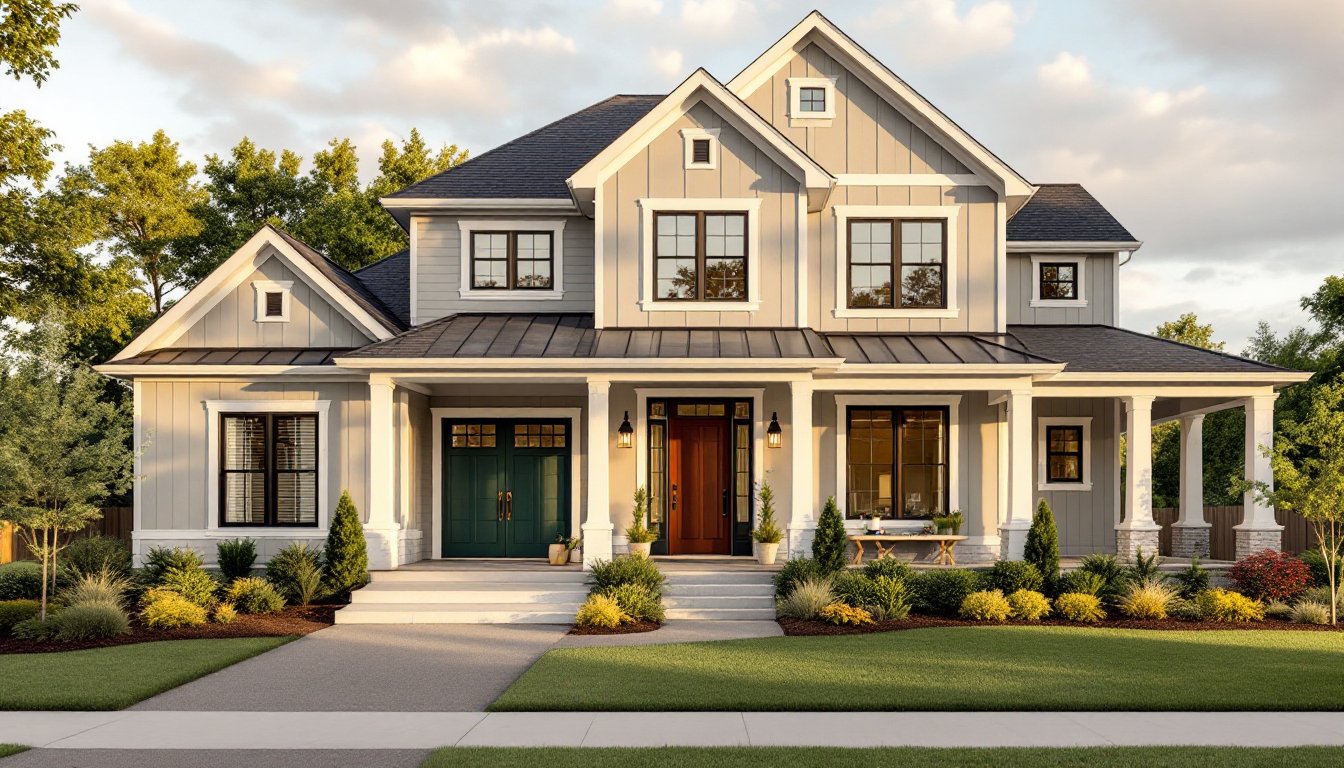
Neutral doesn’t mean your home blends into the neighborhood. The magic is in the trim, door, and accent color choices. A crisp white trim against a warm gray body, paired with a deep forest-green front door, creates elegance without shouting.
Bold and Modern Color Combinations
If neutrals feel too safe, bold exterior colors are having a real moment in 2026. The trick is pairing them thoughtfully so they enhance rather than overwhelm.
Deep navy and charcoal are the workhorse bold colors. Navy reads as sophisticated and works on Victorians, Cape Cods, and modern rectangles alike. Charcoal (a darker gray with almost-black depth) is equally versatile and pairs well with white trim or natural wood accents. These dark colors absorb more heat, which matters in climates where cooling costs are a concern, but they provide dramatic visual impact.
Forest green and deep teal bring color without the casualness of bright shades. Forest green suits traditional homes and cottage styles, while teal works on modern farmhouses and contemporary builds. Both colors deepen with age and rarely look dated. They also photograph exceptionally well.
Burnt orange and warm rust are emerging as alternatives to the tired “terracotta” trend. These deeper, more sophisticated versions of orange work particularly well on Southwestern, Spanish colonial, and Mediterranean-style homes. They ground the house visually and pair beautifully with natural clay tile roofing.
Black accents (either as a full body color on modern homes or as a trim/door color) are increasingly common. If going full black, choose a paint with some undertone variation (warm black, not pure black) to prevent a funereal appearance. Black works on contemporary, industrial, and even farmhouse styles, it’s all about context.
Examples and visual inspiration can be found in comprehensive design collections: contemporary exterior paint ideas showcase modern color combinations and finished homes. The best bold colors are those that feel intentional, not trendy for trend’s sake.
Regional Styles and Climate Considerations
Geography matters more than aesthetics alone when picking exterior paint. Regional architectural traditions and climate conditions shape what colors look right and perform well.
Coastal and humid regions benefit from lighter colors that reflect heat and hide algae and mildew growth common in damp climates. Crisp whites, pale grays, and soft blues are both practical and traditional. Paints with mildew-resistant additives (often labeled “mildew-resistant” or containing mildicide) are essential investments here, they cost $5–$15 more per gallon but extend paint life by years.
Desert and southwestern climates need colors that won’t fade rapidly under intense UV. Warm earth tones, terracotta, and rust tones are traditional because they age visibly without looking damaged. Avoid pure white if possible: it reflects heat but can feel harsh and dates quickly in direct sun. Matte finishes hide dirt better than glossy ones in dusty regions.
Temperate and four-season regions have flexibility. Neutrals work year-round, but dark colors can absorb enough heat to warp trim or siding in extreme summer heat. If choosing dark shades, pair them with lighter trim to minimize heat absorption and ensure adequate ventilation behind siding.
Historic neighborhoods and HOA communities often have architectural guidelines restricting color choices. Check your local design review board or HOA rules before selecting paint. What’s trendy for new construction might violate restrictions in established historic districts.
Climate also affects finish durability. High-quality exterior paint rated for your region’s weather conditions (UV exposure, moisture, temperature swing) matters as much as color. A $50-per-gallon premium paint in the right formula outlasts $25-per-gallon budget paint in the wrong one.
How to Choose the Right Exterior Color for Your Home
Selecting an exterior color requires a process, impulse decisions based on a small paint chip often disappoint when applied to an entire house.
Assessing Your Home’s Architectural Style
Start by identifying your home’s style: Victorian, Cape Cod, ranch, colonial, modern farmhouse, mid-century modern, or contemporary. Certain colors read better on certain architectures. A bold navy works beautifully on a Colonial but can overwhelm a single-story ranch. Forest green suits a cottage but might clash with a 1970s A-frame.
Look at your roof color, siding material, and existing trim. These aren’t changeable overnight, so your new paint should complement them. A warm gray pairs awkwardly with a cool-toned asphalt roof: cool grays work better there. Natural wood siding (cedar shake or stained wood) pairs beautifully with whites, warm grays, and earth tones but less successfully with cool blues or grays.
Consider your neighborhood context without letting it dictate your choice entirely. If every house on your street is white or beige, a thoughtful bold color can set your home apart positively, or negatively, depending on local norms. Look at homes you admire in your neighborhood and note their color strategies.
Testing Colors Before Committing
Never buy 5 gallons of paint based on a color chip. The chip is small, viewed under store lighting, and doesn’t account for your home’s actual lighting conditions (morning sun hits north-facing walls differently than afternoon sun hits south-facing ones).
Instead, buy sample pints of your top 3–4 color choices. Paint 2-foot-by-2-foot test patches on different sides of your house, north, south, and west exposures if possible. View them at different times of day: early morning, midday, and late afternoon. Let them sit for 3–5 days. You’ll see how the color looks under your home’s actual lighting, how it photographs, and whether it meshes with your landscape and surroundings.
Take photos of your test patches in different lighting. Avoid looking at colors under artificial light alone: daylight is how people will see your home 99% of the time. Pay attention to how trim, doors, and landscaping interact with the color.
If you’re uncertain after testing, talk to a local contractor or designer who works in your area. They see finished homes and know which colors age well in your specific climate. Many paint retailers also offer free consultation services. Get samples on your house, not in someone else’s portfolio, before committing to 2,000+ square feet of painted surface.
For additional inspiration and expert guidance, design blogs and home improvement resources document real renovation projects with before-and-after photos, paint-selection processes, and lessons learned. These real-world examples often provide better guidance than trend articles alone.
Conclusion
Exterior paint color is a high-impact, semi-permanent decision that deserves careful thought. Start with your home’s architecture and climate, test colors on your actual house, and avoid rushing based on trends alone. The best color is one you’ll love for years and that complements your home’s unique character, not the one that was Pinterest-popular last month.