Table of Contents
ToggleSpotting tiny brown beetles crawling across your kitchen counter or clustered in a pantry corner is unsettling, and a common problem in homes across North America. These small pests range from harmless nuisances to pantry raiders that can contaminate food and damage stored goods. The good news? Most infestations start small and respond well to targeted identification and cleanup. This guide walks you through identifying the exact beetle type, locating their entry points and hiding spots, understanding what attracted them, and taking practical DIY steps to evict them for good. If the problem persists or spreads, you’ll also know when it’s time to call in a professional.
Key Takeaways
- Tiny brown beetles in your house typically include drugstore beetles, cigarette beetles, flour beetles, and furniture beetles—each attracted to different food sources and materials, so accurate identification is the first step to effective removal.
- Most infestations start when contaminated food is brought home or conditions become favorable; removing infested food, sealing dry goods in airtight containers, and reducing humidity above 50% eliminates the primary attractions.
- Vacuuming, cleaning pantry shelves, using sticky or pheromone traps for monitoring, and freezing or heating suspect food items are proven DIY methods that work for mild to moderate infestations within 3–4 weeks.
- Prevent future infestations by inspecting packaged goods before purchase, storing all dry goods in sealed glass or plastic containers, fixing moisture problems, and maintaining an organized pantry inventory.
- Contact a licensed pest control professional if beetles persist after 4 weeks of cleaning and sealing, or if you spot wood-boring furniture beetles—these require specialized treatments that homeowners shouldn’t attempt alone.
Common Types of Tiny Brown Beetles Found Indoors
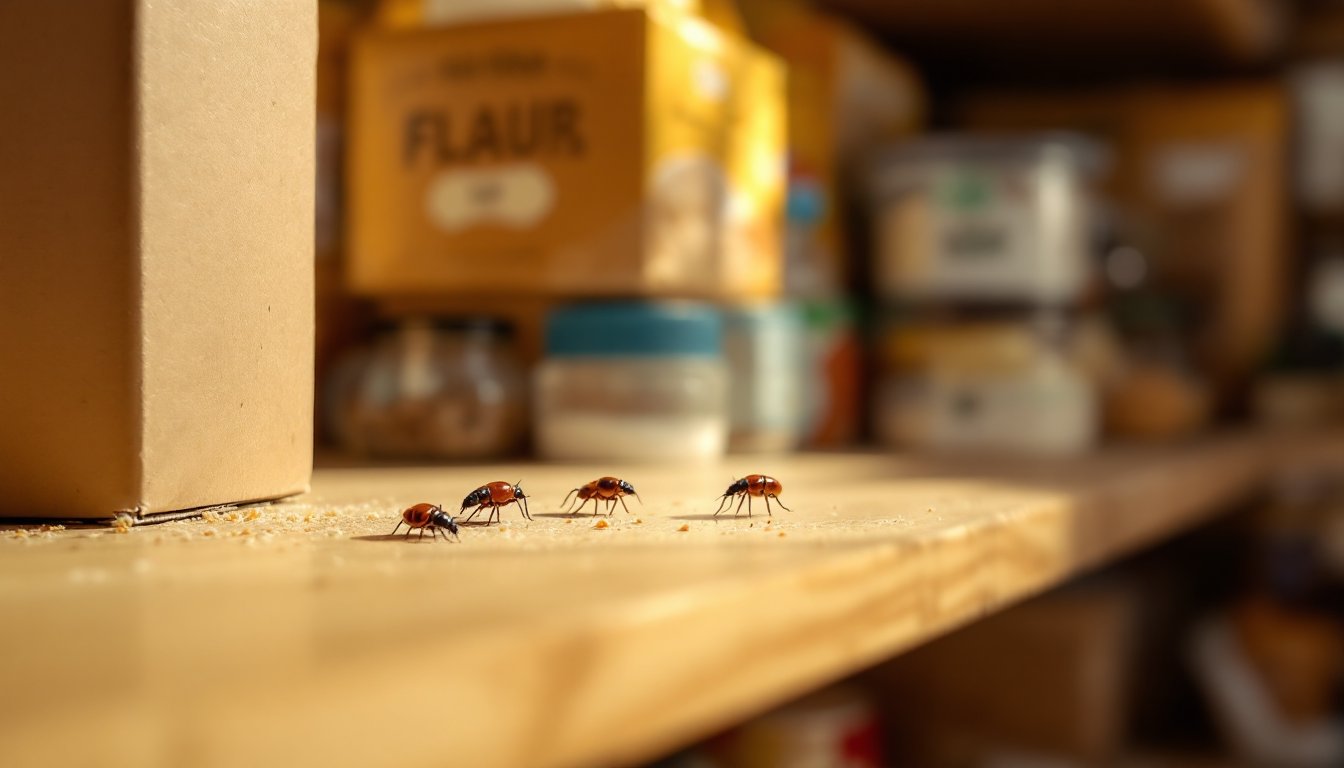
The tiny brown beetles showing up in homes usually fall into a few predictable categories. Drugstore beetles (also called bread beetles) are reddish-brown, about 1/8 inch long, and favor stored grains, cereals, dried herbs, and spices. Cigarette beetles look nearly identical but are slightly rounder and prefer tobacco, dried foods, and pet food. Both have a distinctive humped appearance and can survive for months inside unopened packages.
Flour beetles, including the red flour beetle and confused flour beetle, are similar in size but flatter and often found in flour, cornmeal, and other grain products. Furniture beetles (powderpost beetles) are larger, around 1/4 inch, and more commonly found in hardwood floors, cabinets, and structural wood. If you see tiny exit holes in wood, this species is likely the culprit.
To narrow down which type you’re dealing with, note the color (reddish-brown vs. darker brown), shape (rounded vs. elongated), exact location of discovery, and what food or material was nearby. A magnifying glass helps. If you can trap one in a sealed container, a local extension office can often identify it for free and provide specific treatment advice.
Where Tiny Brown Beetles Hide in Your Home
Tiny brown beetles gravitate toward dark, undisturbed spaces where food, moisture, or wood is present. Start your search in the kitchen pantry, inside and behind dried goods, flour containers, cereal boxes, and spice racks. Check the undersides of shelving, corners, and the gaps where cabinet doors close.
Don’t forget baseboards, wall voids, and ceiling spaces where food crumbs accumulate or structural wood offers harbor. Look in pet food bags and storage bins, especially if they’ve been sitting unused for weeks. Beetles love old cardboard, check boxes in closets, attics, and storage areas.
For furniture beetles specifically, examine hardwood flooring, wooden beams, built-in cabinets, and antique furniture for exit holes (tiny, clean-edged holes about the size of a pin). Run your hand along edges and corners where you feel sawdust or frass (beetle droppings, which look like fine powder). Damp wood attracts them more, so pay extra attention to areas prone to moisture, under sinks, around bathroom pipes, and in basements. Once you’ve located activity, take photos and note the exact spots: this information helps if you need professional help later.
Why These Pests Invade Homes and What Attracts Them
Tiny brown beetles don’t invade homes out of spite, they come for food, moisture, and shelter. Food sources are the primary draw: open or poorly sealed grain products, flour, cereal, dried fruits, nuts, pet food, and even chocolate attract them like magnets. Beetles also breed and thrive in pantries with high humidity or poor air circulation.
Infestation typically begins when beetles hitchhike indoors in contaminated food you bring home from the grocery store, farmers market, or bulk bins. A single female can lay dozens of eggs inside a sealed package before you even notice the beetles. Temperature between 70°F and 85°F and humidity above 50% speed up their reproduction cycle.
Structural wood in damp basements, crawl spaces, or under leaky gutters attracts furniture beetles. Older homes with historical wood frames or hardwood floors are especially vulnerable. Poor ventilation, roof leaks, or plumbing issues create the moist conditions these species prefer. The longer the condition persists, the deeper the infestation. Address moisture problems, fix leaks, improve ventilation, and reduce humidity, and you remove half the attraction. Homeowners often underestimate how quickly a small oversight (leaving cereal in its cardboard box, for instance) becomes a breeding ground for dozens or hundreds of beetles over a few weeks.
DIY Methods To Get Rid of Tiny Brown Beetles
Once you’ve identified the type and located the hotspots, a methodical cleanup and removal plan works for most mild to moderate infestations.
Vacuuming, Cleaning, and Decluttering Strategies
Step 1: Remove contaminated food. Throw out any infested packages without hesitation, don’t open them or try to salvage contents. Even if you see only one beetle, the whole package is likely colonized. Use a damp cloth to wipe down shelves, baseboards, and corners, then vacuum thoroughly, paying special attention to crevices, shelf undersides, and wall junctions. Empty the vacuum outside immediately: don’t let the bag or canister sit indoors.
Step 2: Clean storage containers. Wash all pantry bins and containers with hot soapy water, dry completely, and inspect for eggs (tiny white specks) before refilling. Don’t rush back to cereals and grains, wait a week to confirm no new beetles appear.
Step 3: Declutter and reorganize. Remove stacks of old cardboard boxes, paper bags, and unused storage. Beetles hide in clutter for months. Store dry goods in airtight glass or plastic containers with tight-fitting lids, not their original cardboard or paper bags. Label containers with contents and purchase dates.
Step 4: Apply heat or freezing (for small items). If you suspect flour, cereal, or dry goods of harboring eggs but want to save them, seal in a plastic bag and freeze at 0°F for at least 4 days, or heat to 140°F in an oven for 30 minutes. Monitor temperature with a food thermometer to avoid spoiling the food. This kills all life stages.
Step 5: Use traps and monitoring. Place sticky traps or pheromone traps (available online and at hardware stores) in the pantry and under cabinets. These attract beetles and let you monitor if the population is declining. Replace weekly. If you’re still catching beetles after 3 weeks of intensive cleaning, the infestation may be deeper or in a hidden area.
Step 6: Reduce humidity. Run a dehumidifier in the pantry or kitchen if humidity is above 60%. Beetles breed faster in damp conditions. Ensure your range hood vents outside and check for leaks under sinks or around pipes.
Preventing Future Infestations in Your Home
Prevention is far easier than eradication. After you’ve cleared an infestation, lock in your wins with these habits.
Buy smart. Inspect packaged goods at the store before buying, open boxes, check for signs of life or damage. Bulk bins are convenient but high-risk: buy only what you’ll use within a month. Choose airtight containers over cardboard or paper whenever possible.
Store correctly. Transfer all dry goods, flour, oats, pasta, cereal, dried herbs, pet food, into sealed glass or plastic containers kept in a cool, dry pantry. Even unopened boxes deteriorate: don’t trust the packaging alone. Organize by use date so older stock gets used first.
Maintain your home. Fix roof leaks, seal gaps around pipes, and improve ventilation in damp areas. Use caulk or weatherstripping to seal cracks where beetles might enter from outside. Keep basements and crawl spaces dry with proper grading and, if needed, a sump pump or dehumidifier.
Inspect deliveries and visitors’ items. Used furniture, vintage books, or secondhand cardboard can harbor beetles. Inspect and isolate new items in a garage or outdoor space for a week before bringing them into the home.
Rotate stock. A pantry inventory sheet tracking what’s inside and when it was purchased prevents expired or forgotten goods from becoming beetle breeding grounds. Donate or compost items you won’t use within 6 months.
When To Call a Professional Pest Control Service
If you’ve cleaned thoroughly, sealed food, and reduced moisture but continue catching beetles in traps after 4 weeks, or if you spot evidence of furniture beetles (exit holes in structural wood, sawdust on floors), it’s time to call a licensed pest control professional. Powderpost beetles and wood-boring species require targeted treatments that homeowners shouldn’t attempt alone, improper application can damage finishes or miss the infestation entirely.
A professional will conduct a thorough inspection, identify the exact species, locate hidden colonies, and recommend treatment options, which may include localized pesticide sprays, wood injections, fumigation, or heat treatments for severe cases. Some municipalities require permits for structural pest treatment, so your pest control service will navigate that. Costs vary by region and severity, but expect $300–$1,500 for an inspection and treatment plan. If your home has a history of moisture problems or you’re in an older structure with extensive wood framing, annual inspections by a professional can catch early infestations before they spread. Document everything, photos, trap counts, dates of observation, to share with the pest control inspector: it saves time and ensures targeted treatment.