Table of Contents
ToggleLiving small doesn’t mean living tight. A well-designed tiny house interior makes every square foot count without feeling cramped or cluttered. Whether you’re downsizing, house hacking, or simply looking to optimize a compact home, the right design principles transform limited space into a functional, comfortable sanctuary. This guide walks you through proven strategies that professional designers use, and that you can carry out yourself, to make your tiny house feel spacious and livable.
Key Takeaways
- Strategic furniture placement and multifunctional pieces—like sofas that double as beds and wall-mounted desks—are essentials in a tiny house inside to maximize functionality without clutter.
- Light, neutral wall colors and layered lighting (ambient, task, and accent) significantly enhance perceived space better than any furniture rearrangement can achieve.
- Vertical storage from floor to ceiling transforms wasted wall space into functional real estate, making a tiny house inside feel larger and more organized.
- Use rugs, furniture placement, and subtle color shifts to define zones in open-plan tiny houses, creating psychological separation that makes the space feel intentional rather than cramped.
- Maintain at least 18 inches of walking space between furniture and hide at least 80% of everyday belongings through smart storage solutions to prevent claustrophobia and clutter overload.
- DIY projects like installing floating shelves, painting walls light neutrals, and adding mirrors offer immediate, affordable improvements that transform a tiny house interior’s functionality and comfort.
Strategic Furniture Placement and Multifunctional Pieces
The biggest mistake in tiny houses is oversized or too-many furniture pieces. Before you buy anything, measure your space and sketch a floor plan to scale. Use painter’s tape on the floor to mark furniture placement, this takes 10 minutes and saves hours of rearranging.
Every piece must earn its place. A sofa that doubles as a guest bed, a coffee table with hidden storage, or a desk that folds into the wall aren’t luxury features in a tiny house, they’re necessities. Look for Ottoman storage cubes, nesting tables, and wall-mounted desks that collapse when not in use.
Floating furniture away from walls sounds counterintuitive in a small space, but it actually makes rooms feel larger. Anchor a seating area toward the center of the room rather than pushing everything to the perimeter. This creates visual separation and makes the space feel intentional, not cramped.
One critical rule: leave at least 18 inches of walking space between major furniture pieces. Claustrophobia kills a small space faster than clutter. If you can’t walk freely, the room shrinks psychologically even if the square footage says otherwise.
Smart Storage Solutions That Hide Clutter
Clutter is the enemy of perceived space. In a 400-square-foot house, visible items pile up mentally as well as physically. Your storage strategy should hide at least 80% of everyday belongings, and keep the remaining 20% organized, not scattered.
Build storage into walls where possible. Recessed shelving between studs adds zero floor space but holds books, decor, or supplies. If you’re renting or can’t modify walls, tall, narrow shelving units in corners work well. Vertical storage (shelves from floor to ceiling) uses dead wall space that would otherwise be wasted.
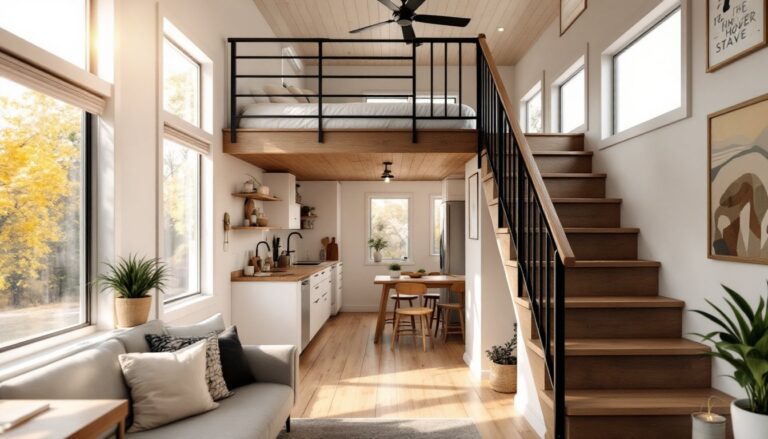
Use the space under stairs, beds, and windowsills. A platform bed with built-in drawers underneath provides sleeping plus storage in one footprint. Under-stair storage is a goldmine, measure the height, depth, and width carefully, then build or install pull-out drawers or baskets.
Label and contain everything. Clear plastic bins, labeled baskets, and drawer dividers cost $30–50 total but prevent the “junk drawer” chaos that makes tiny spaces feel out of control. Assign every item a home. If it doesn’t have a designated spot, it doesn’t belong in a tiny house.
Consider small space living ideas from experts who specialize in compact homes, they often share creative storage hacks tailored to tight layouts.
Color and Lighting to Enhance Perceived Space
Paint color and lighting do more for perceived space than any furniture rearrangement. Light, neutral wall colors (soft whites, pale grays, warm creams) reflect light and make rooms feel open. Avoid dark accent walls in tiny houses, they visually shrink the space. If you want color, use it on trim, one small wall, or in decor rather than large wall surfaces.
Be strategic with lighting layers. A single overhead fixture creates shadows and pools of darkness. Instead, use ambient lighting (ceiling fixture or recessed lights), task lighting (desk lamp, under-cabinet strips), and accent lighting (wall sconces, string lights) to eliminate dark corners that make the space feel smaller.
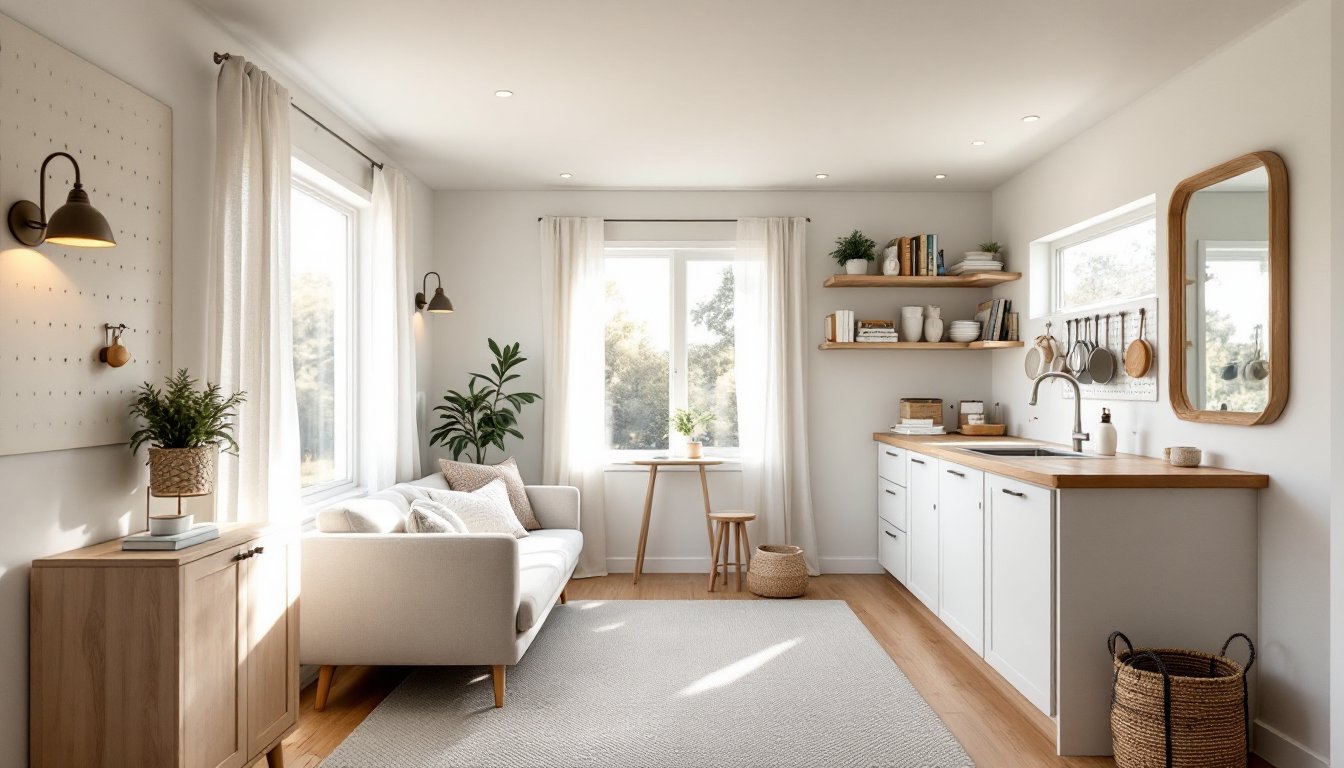
Maximize natural light. Sheer curtains diffuse sunlight without blocking it. Mirrors opposite windows bounce light throughout the room and visually expand sightlines. A 4′ × 6′ mirror can make a corner feel twice as open.
Light-colored flooring, light wood, light tile, or light laminate, also expands perceived space. If you have existing dark flooring, large light-colored rugs create bright zones that offset the darker base.
Consider matte finishes for walls and semi-gloss for trim. Matte paint hides imperfections (important in tight spaces where every inch matters), while semi-gloss on trim reflects light subtly without looking shiny.
Creating Defined Zones Without Walls
A studio or open-plan tiny house needs visual boundaries between living, working, and sleeping areas. Without them, the space feels chaotic even when it’s tidy.
Use rugs to anchor zones. A 5′ × 8′ rug under a seating area defines that zone without a physical wall. Different rugs for different areas signal to your brain that you’re moving between spaces, a psychological trick that makes the home feel larger.
Furniture placement creates zones. Position a bookcase or low shelving unit as a subtle room divider. It blocks sightlines without blocking light, and it provides storage on both sides. A 3-4 foot tall shelving unit works better than floor-to-ceiling, you want visual separation, not a wall replacement.
Color shifts and lighting changes also define zones. The “bedroom” might have warmer lighting and a slightly warmer paint tone. The “office” might be brighter. These subtle differences help your mind compartmentalize the space.
Curtains or sliding panels offer temporary zone separation. Modern home design often features pocket doors and sliding barn doors for this reason, they close off spaces when needed but don’t take up swing space like traditional doors.
Vertical Space: Build Up, Not Out
Vertical storage and design should be your obsession in a tiny house. Every wall from floor to ceiling is real estate.
Install shelving up to the 8-foot mark or higher if your ceiling allows. Most wall space sits empty above eye level, that’s wasted opportunity. Floating shelves or bracket-mounted bookcases hold books, decor, and supplies without consuming floor space.
Wall-mounted desks, fold-down tables, and hanging organizers maximize vertical surfaces. A desk that mounts to the wall and folds down when not in use saves hours of desk hunting and gives you a proper workspace in a studio.
Hang pots and pans, utensils, and supplies on wall hooks or pegboards in the kitchen. This uses vertical space, keeps items accessible, and frees cabinet space for bulk storage. A pegboard above the stove or counter costs $30 for materials and takes two hours to install with basic tools.
Hang plants, art, and even a TV on walls rather than placing them on furniture or floors. Wall mounting opens up floor sightlines, which makes the room feel airier.
Measure carefully and use quality wall anchors. In a tiny house, every wall sees heavy visual weight. Sawtooth hangers, toggle bolts, or studs (always preferred) ensure your vertical storage stays secure, and doesn’t create a safety hazard.
Practical Updates You Can DIY Today
You don’t need a designer or contractor for these immediate wins.
Install floating shelves: Locate studs with a stud finder (a $15 tool), or use heavy-duty toggle bolts between studs. Shelves give you instant vertical storage. Use a level, drill pilot holes, and secure with lag bolts or wood screws into studs. Plan on 2–3 hours for four shelves including hardware purchase.
Paint your walls: Light, neutral colors are the cheapest way to expand perceived space. A gallon of quality interior paint covers roughly 400 square feet and costs $25–40. One coat on trim and two coats on walls, budget a weekend for drying time between coats.
Add mirrors: Hang a large mirror opposite a window or light source. Use mirror adhesive tape or a wall anchor designed for mirrors. Installation takes 15 minutes and costs under $50 for a decent-sized mirror.
Organize with containers and labels: Clear plastic bins, woven baskets, and drawer dividers cost $50 total from a hardware store. This is your highest-ROI project, it immediately makes your space feel controlled and intentional.
Switch to wall sconces: Replace or supplement overhead lights with wall sconces. Run wire along the wall base (or hire a licensed electrician for $200–400 if you need new circuits, codes require permits for electrical work). Sconces eliminate dark corners and cost $20–100 per fixture.
Add a pegboard: Budget home renovation projects like pegboards are ideal for tiny spaces. Mount a 4′ × 2′ pegboard in the kitchen or office for under $40 and customize it with hooks. Takes an afternoon with a stud finder and level.
Conclusion
Designing a tiny house interior comes down to intentionality. Every piece, color, and storage solution should serve a purpose. The most livable tiny homes aren’t the most decorated, they’re the most organized and thoughtfully arranged. Start with one or two projects: add vertical storage, paint your walls a light neutral, and declutter ruthlessly. These three steps alone transform a cramped space into one that feels open and functional.