Table of Contents
ToggleTiny home living doesn’t mean tiny compromises on storage. A closet in a small space can feel like a Tetris puzzle, cramped, chaotic, and frustrating. But with the right closet organization strategies, even a walk-in the size of a phone booth can hold everything you need. The key isn’t finding more square footage: it’s maximizing what you’ve got. This guide walks through seven practical tiny home closet ideas that transform cramped storage into a functional system. From wall-mounted solutions to smart furniture choices, these tactics help homeowners and DIY enthusiasts reclaim closet real estate without a gut <a href="https://genoahouseinn.com/budget-home-renovation-ideas/”>renovation or expensive contractor work.
Key Takeaways
- Tiny home closet ideas prioritize vertical storage with wall-mounted shelving, secondary rods, and rail systems that transform dead space into functional organization.
- Decluttering ruthlessly and building a capsule wardrobe are essential before investing in organizers—fewer items reduce storage needs and increase daily visibility and wear.
- Slim hangers, shelf dividers, and over-the-door organizers maximize hanging and folded-item capacity without requiring expensive renovations or floor space.
- Proper lighting and mirrors make small closets feel larger while improving functionality, with LED strip lights costing just $15–$40 and adding visual depth.
- Non-permanent solutions like modular systems, tension rods, and baskets work best for renters and mobile homes, offering flexibility without permanent installation costs.
Maximize Vertical Space With Wall-Mounted Solutions
The golden rule in tiny home closets: go up, not out. Most small closets waste vertical space above eye level. Installing wall-mounted shelving, rods, and hooks transforms dead space into prime real estate.
Use Every Inch With Slim Shelving And Narrow Rods
Install floating shelves 12 to 18 inches apart, starting 12 inches below the ceiling. This keeps motion sensors (if installed) unblocked and gives room for items taller than a stack. Use shelves 16 to 20 inches deep, deep enough for folded items but narrow enough to fit small closets without blocking the door swing.
For hanging space, add a secondary rod 42 to 48 inches above the floor. This sits below full-length items and lets you double your rod capacity. Secure it to a stud or use heavy-duty toggle bolts rated for at least 25 pounds: trust the hardware, not the assumption that your closet wall is solid.
Mountain climbers and small-space dwellers benefit from rail systems with multiple levels. These let you hang items at three heights instead of one, turning a standard 24-inch-wide closet into a multi-tier storage machine. Install these systems level, use a 2-foot level and mark stud locations before drilling. Crooked shelves don’t just look bad: they make items slide and discourage use.
For corners, install corner shelving or angled brackets to capture wasted space. A corner shelf 12 inches deep and 24 inches wide adds storage without eating precious floor area. Use 2.5-inch shelf brackets minimum: flimsy hardware fails under weight and creates safety hazards.
Master the Art of Decluttering and Capsule Wardrobe Building
Storage problems often aren’t storage problems, they’re hoarding problems dressed up as wardrobe fatigue. Before buying a single organizer, purge ruthlessly. A tiny home closet forced this reality: you own fewer items, so every piece has to earn its space.
Start with the three-box method: keep, donate, and sell. Be honest. If you haven’t worn it in 18 months and it doesn’t fit, it doesn’t belong. Tiny closets punish indecision: every item is visible, so you’re more likely to actually wear what’s there.
Once you’ve purged, build a capsule wardrobe, a limited palette of items that mix and match. Choose a color scheme (neutrals with one or two accent colors work best) and focus on basics: jeans, white t-shirts, simple tops, and layering pieces. This isn’t fashion advice: it’s math. Fewer items mean less space needed and more visibility of what you own.
Consider the small home renovation mindset: constraints force smarter choices. The same thinking applies to wardrobes. With fewer pieces in a smaller closet, you’ll wear everything more and feel less overwhelmed every morning. This psychological win often matters more than the physical storage gain.
Multi-Functional Furniture and Closet Organization Systems
Storage furniture pulls double duty in tiny homes. A narrow dresser (20 to 24 inches wide) fits under high windows or beside a closet door without blocking traffic. Stack sweaters and folded items inside drawers, freeing hanging rod space for garments that wrinkle easily.
Over-the-door shoe racks and organizers add storage without floor footprint. Install a sturdy hanger hook rated for 15+ pounds on the closet door’s interior: cheap adhesive hooks fail under weight. A 12-pocket shoe organizer holds 12 pairs, plus scarves, belts, or accessories stuffed in extra pockets.
For hanging items, slim, non-slip hangers (like velvet or flocked plastic) save inches per item compared to wooden hangers. A standard rod fits about 16 wooden hangers: swap to slim hangers and fit 20+ without crowding. It sounds trivial until you count the gained space.
Shelf dividers and risers prevent the avalanche effect. Stack folded sweaters, but use dividers to prop them upright so you see every item without digging. Similarly, tiered shelf risers (4 to 8 inches tall) add a second level on existing shelves, doubling folded-item storage.
The home renovation ideas on a budget angle here: IKEA systems and budget organizers cost $50–$150 total. Custom built-ins run $2,000+. For renters, especially, cheap modular systems beat permanent installation. Just measure before buying, closet dimensions are often non-standard.
Lighting and Mirrors: Making Small Closets Feel Bigger
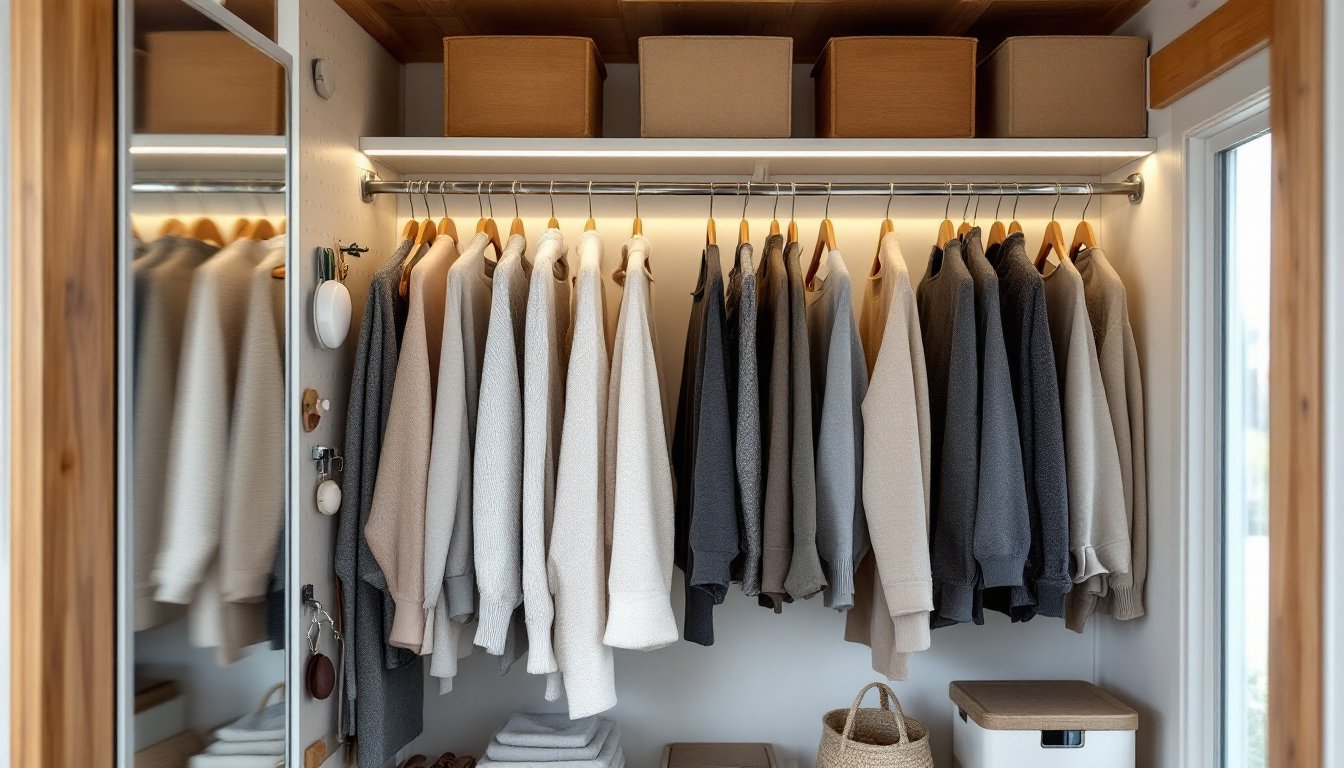
A dark closet feels smaller and discourages use. Install battery-powered LED strip lights or motion-sensor closet lights on the upper shelf or ceiling. LED uses little power and runs cool, so it won’t damage fabrics. Cost: $15–$40 for a strip light.
If the closet has a ceiling outlet, hardwire a 60-watt LED bulb in a recessed fixture or simple dome light. Run an electrical cable along the stud to a wall switch just outside the closet door. This requires basic wiring: flip the breaker, run cable through conduit, and connect the fixture to the switch loop. If you’re unsure, hire a licensed electrician, $150–$300 is reasonable for one light circuit.
A full-length mirror on the inside of the closet door reflects light and gives the illusion of depth. Hang it 48 inches from the floor (center height for most people) using mirror clips secured to studs. If there’s no stud, use toggle bolts rated for 25+ pounds.
Mirrors also serve function: you can see outfit combinations before committing. This simple visual aid cuts decision fatigue in mornings. For a design edge, sources like Apartment Therapy show how mirrors in small spaces multiply perceived size, a $30 mirror often feels like a renovation.
Creative Storage Solutions for Underutilized Spaces
Tiny home closets rarely fill entire wall-to-wall, floor-to-ceiling areas. Side walls, dead corners, and the wall beside the door are opportunities.
Under-shelf baskets (woven or fabric) corral folded items without taking rod space. Mount them on a tension rod strung 12 to 18 inches below an existing shelf, creating a hidden layer. Cost: $10–$25 per basket.
Wall-mounted pegboards (24 by 36 inches) store accessories, hats, and bags. Screw the pegboard directly into studs using 1.25-inch wood screws, spaced 12 inches apart. Add hooks, shelves, and bins to the pegboard as needed. This modular approach lets you reconfigure without rewalling.
Don’t forget the ceiling. A narrow rod can hang above the main rod for out-of-season items. A command tension rod needs no tools and holds light garments or scarves. Swap in seasonal clothing quarterly, winter coats hang low in winter, then live overhead in summer.
Vacuum storage bags compress bulky items like pillows or off-season jackets. They’re not permanent storage (plastic breaks down and bags leak over time), but for rotating seasonal gear, they’re practical. Stack them on a high shelf where they’re out of daily reach.
Consider the mobile home renovation angle: manufactured homes have unusual closet dimensions. Modular, non-permanent solutions (baskets, rods, pegboards) beat built-ins because you can adapt fast. The same thinking works for rentals or anyone hesitant about permanent changes.
Hooks and rails multiply vertical hanging capacity. Install a horizontal rail 18 inches down from the ceiling along one wall, then hang hooks 6 inches apart. This runs belt loops, hat hangers, and scarves without touching the main rod. Space rails 8 to 10 inches apart vertically for different item types.
Conclusion
Tiny home closet solutions aren’t about finding more space, they’re about using what exists smarter. Vertical storage, ruthless decluttering, slim organizers, good lighting, and creative fixtures transform a cramped closet into a functional system. Start with the highest-impact changes: a second rod or shelf, better lighting, and a purge. From there, add hooks, baskets, and mirrors as budget and comfort allow. The result isn’t just a tidy closet: it’s a space that works with you instead of against you. For more inspiration, explore budget home renovation ideas and DIY decoration strategies tailored to small homes.